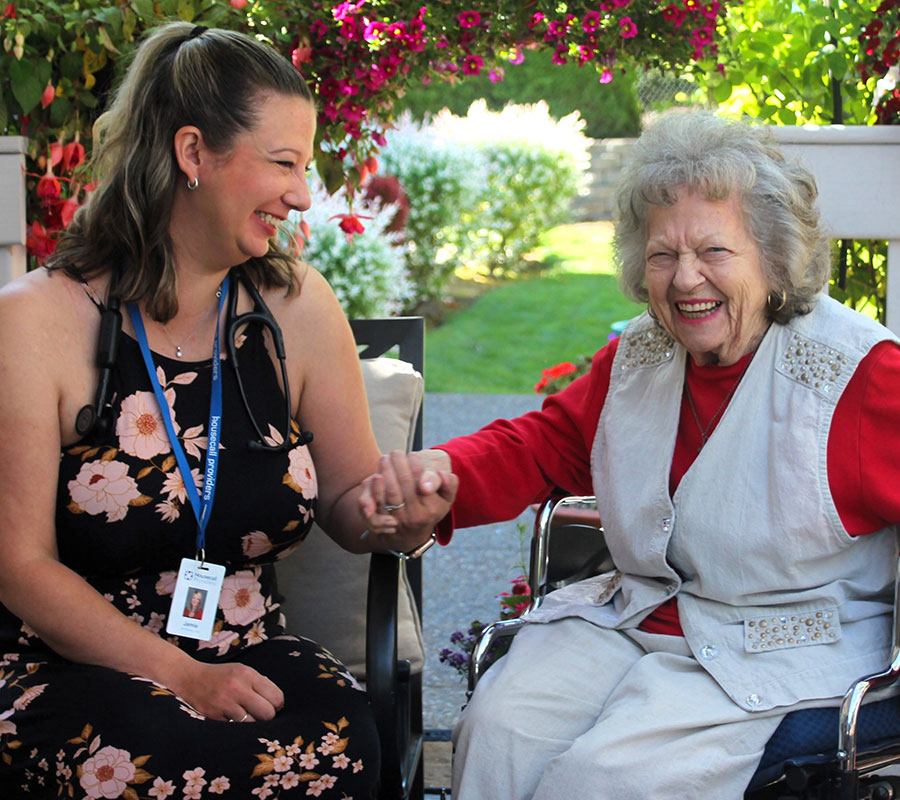
Call today for a free evaluation
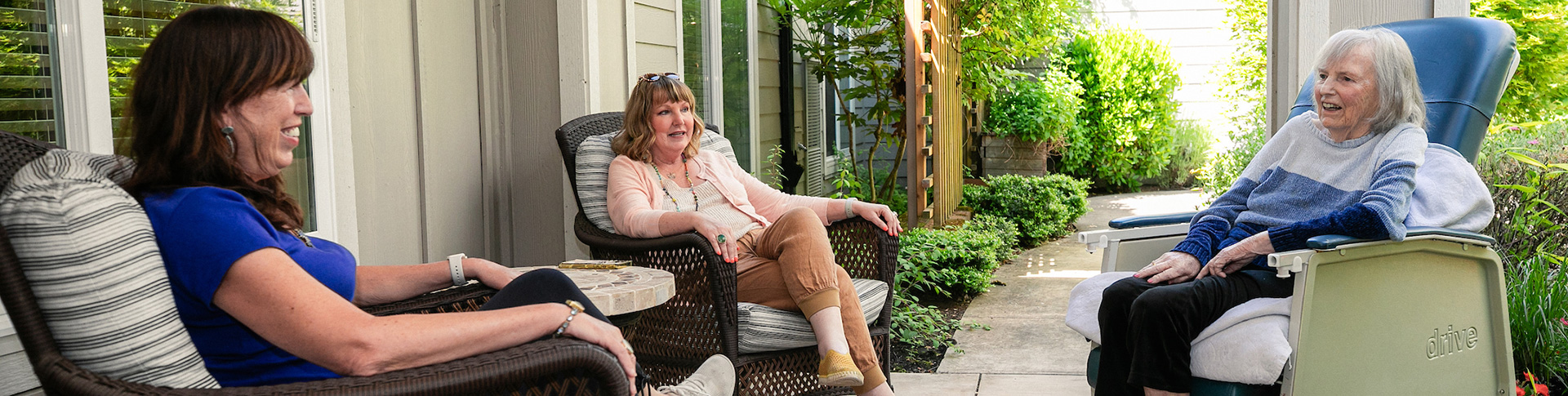
Not-for-profit hospice care in Portland, Oregon
Proudly serving Multnomah, Washington and Clackamas counties since 2009
Compassionate hospice care at home
Housecall Providers Hospice brings in-home physical, emotional and spiritual care and support to whatever place our patients call home – including private homes, adult care homes, assisted living facilities and more.
Covered 100% by Medicare and Medicaid
Hospice is covered 100% by Medicare and Medicaid. Some private insurances may require a copayment or coinsurance. Our team is available now to help you review coverage and answer any other questions you may have – call us at 971-202-5501.
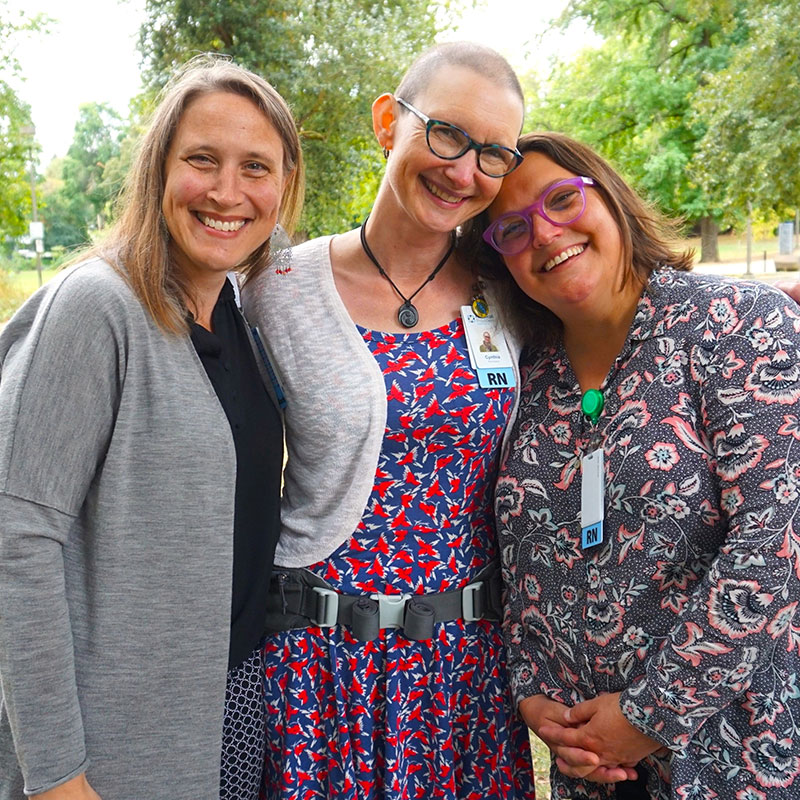
Nonprofit hospice care trusted by the community

Testimonials of our care

"Housecall Providers Hospice is amazing. The nurses are well versed in all aspects of end-of-life care. The nurses and providers are very prompt with any orders or questions. If my time has come I would like Housecall Providers Hospice to take care of me. Thank you for all you do for our loved ones."
"I have just ended three months working with Housecall Providers for the care of my husband. The team I worked with was kind, professional and dedicated. There was always someone to help me when I needed it. As my husband’s mental abilities declined, they still treated him with respect and kindness. If you are looking for a hospice provider, I highly recommend this organization."
"Housecall Providers Hospice did a great job as my mom was in her last days and weeks. They provide the perfect balance of caring and professionalism in the most crucial times. I can’t say enough good things about my experience."
Meet our interdisciplinary hospice team

Patient & family
Patients and families share their goals, values and wishes to help guide personalized hospice care that reflects what matters most.

Caregiver
Often a family member or close friend who knows the patient best and helps guide the hospice care team by sharing insights about daily needs, preferences and comfort.

Primary care provider
The patient’s primary care provider remains involved in hospice care through regular communication and collaboration with the hospice team.

Medical director
The hospice medical director oversees the patient’s overall hospice and end-of-life care, working closely with the PCP and the interdisciplinary care team.

Nurse case manager
Your hospice nurse case manager will visit you as needed and is available 24/7 to help with symptom control while also providing family and caregiver education.

Social worker
Hospice social workers support patients and families with emotional, social, financial and caregiving challenges commonly experienced at the end of life.

Spiritual counselor
The hospice spiritual counselor offers non-denominational spiritual and emotional support, honoring individual belief systems through compassionate listening.

Certified nursing assistant
Hospice certified nursing assistants help with personal care needs such as bathing, light housekeeping and companionship through weekly or as needed visits.

Bereavement coordinator
The bereavement coordinator assesses family grief needs and provides bereavement support services for up to one year following a patient’s death.

Volunteer coordinator
The volunteer coordinator recruits, trains and manages hospice volunteers and works with families to identify appropriate volunteer support services.

Hospice volunteers
Trained, background checked community volunteers provide companionship, respite care and additional support for patients and caregivers.
When is it time to start hospice for a loved one?
- Hospice is a benefit for patients whose life expectancy is six months or less.
How do I start hospice care?
- Call Housecall Providers Hospice today at 971-202-5501 to request a free evaluation from our clinical staff to see if hospice is the right option for you or a loved one.
- You or your provider can contact our hospice and make a referral at any time. Once we receive the referral, we will coordinate a time to meet with the patient and family to discuss and assess the patient for services.
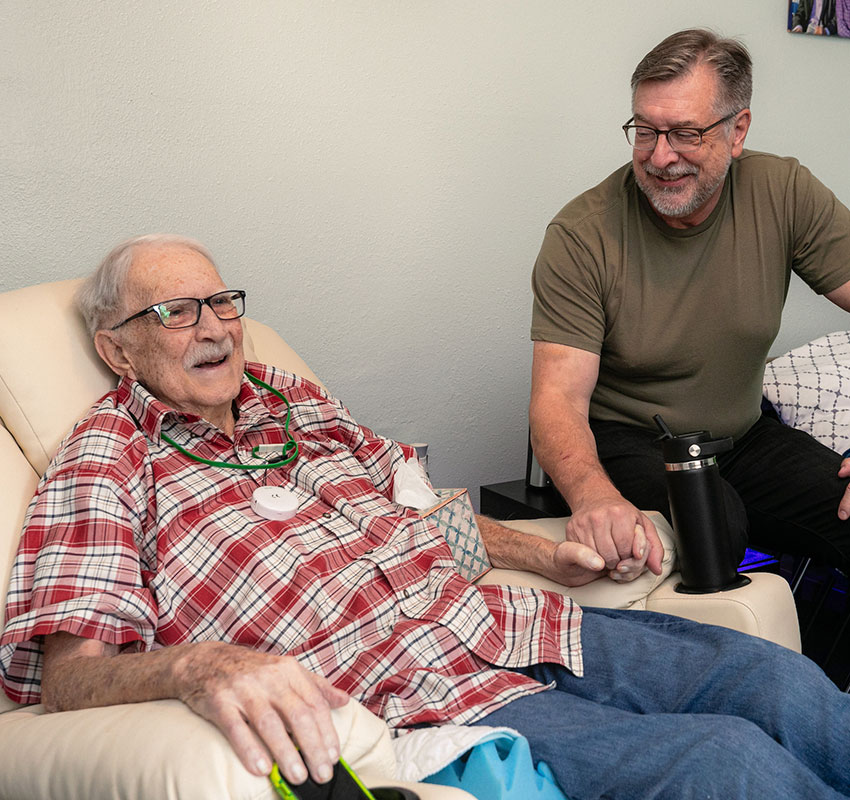
Why choose nonprofit hospice care?
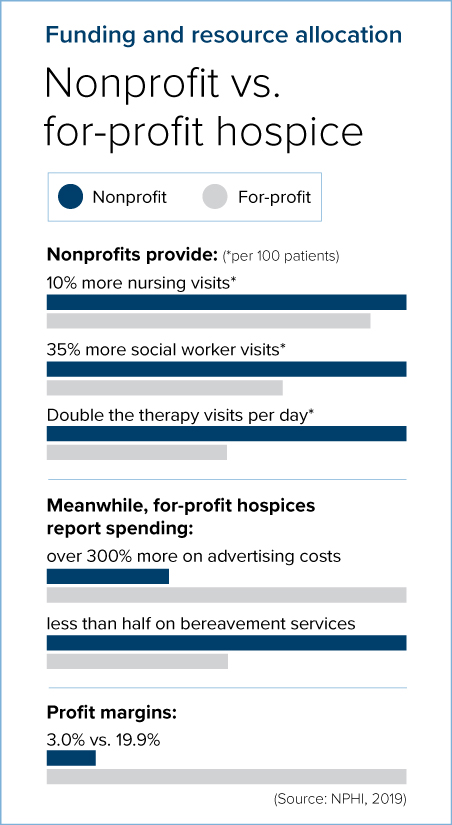
Nonprofit hospices, like Housecall Providers Hospice, prioritize patient well-being and holistic care over financial gain, operating with fundamentally different philosophies, goals and impacts on the patients, families and communities they serve in comparison to for-profit hospices.
This focus is reflected in resource allocation, as nonprofit hospices deliver 10% more nursing visits, 35% more social worker visits and twice as many therapy visits per day, per 100 patients.
By contrast, for‑profit hospices spend over 300% more on advertising, invest less than half as much in bereavement services and maintain a 19.9% profit margin compared to 3% for nonprofits – retaining a far greater share of Medicare payments as profit, while nonprofits reinvest most revenue into patient care and community support.
Source: NPHI People Over Profits Blueprint Report
Hospice or palliative care - which is right for me?
In addition to hospice care, we also offer community-based palliative care through the Housecall Providers Advanced Illness Care program. Hospice care and palliative care both focus on the comfort, care and quality-of-life of individuals with a serious illness. Hospice care is a specific type of palliative care that is provided in the final weeks or months of life.
Our team is available to help you learn more about these two types of care to determine which may be most appropriate for you or a loved one.